This project is based in Houston’s Third Ward and is aimed at assisting in crisis preparation and relief. The site is the Golden Age Hobby House, located on Winbern Street, with the goal of revamping the existing building and entire property into a Resilience Hub. The project focuses on one specific aspect of what a comprehensive hub could be, while acknowledging that many other layers would be needed for a fully holistic solution.
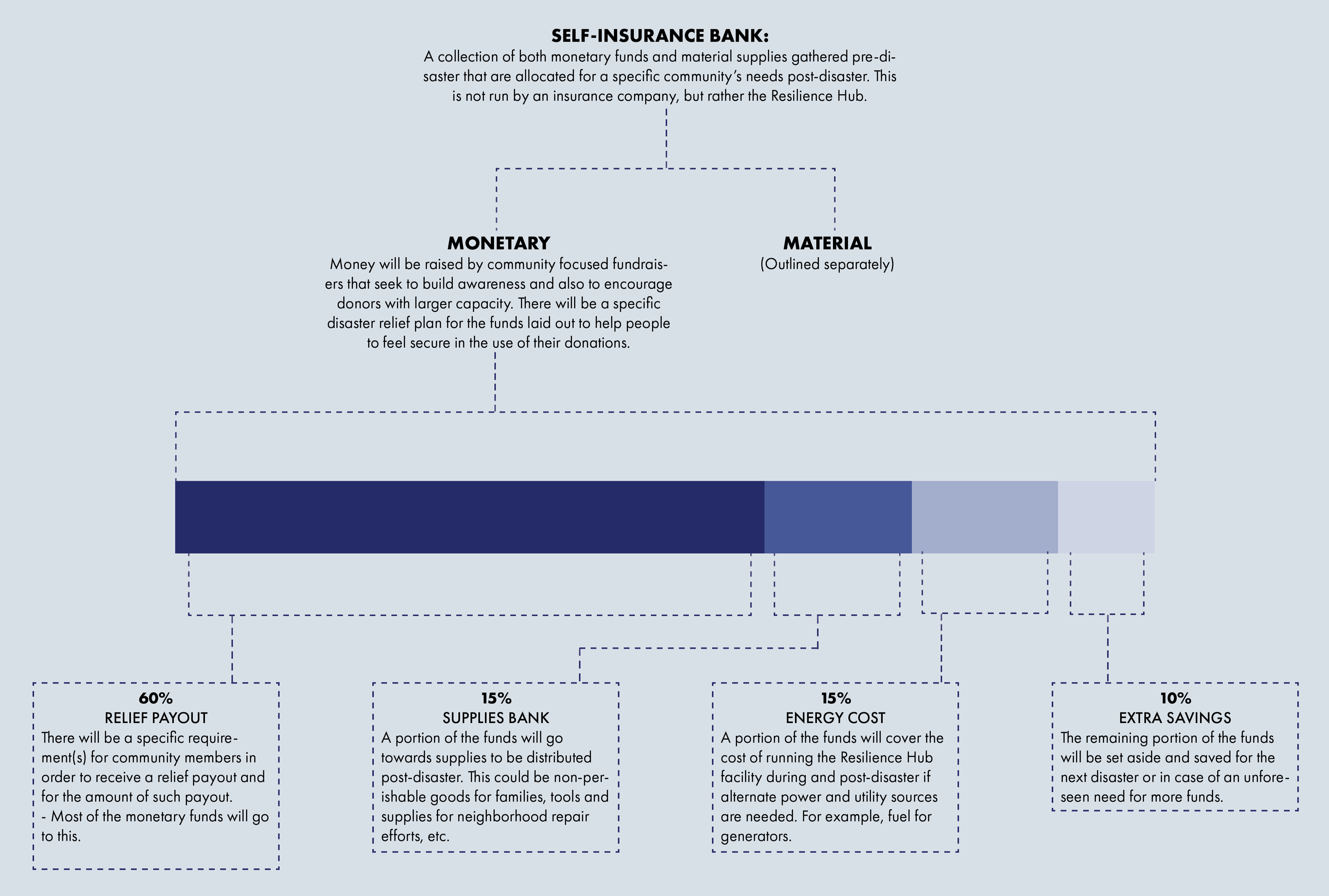
In background work completed in teams prior to developing this design individually, the concept of a Self-Insurance Bank was developed - a community-based resource for both monetary and material needs. This bank would be stocked ahead of time through donations and fundraising efforts, ensuring there is existing supply when a crisis such as a hurricane or flood arises.
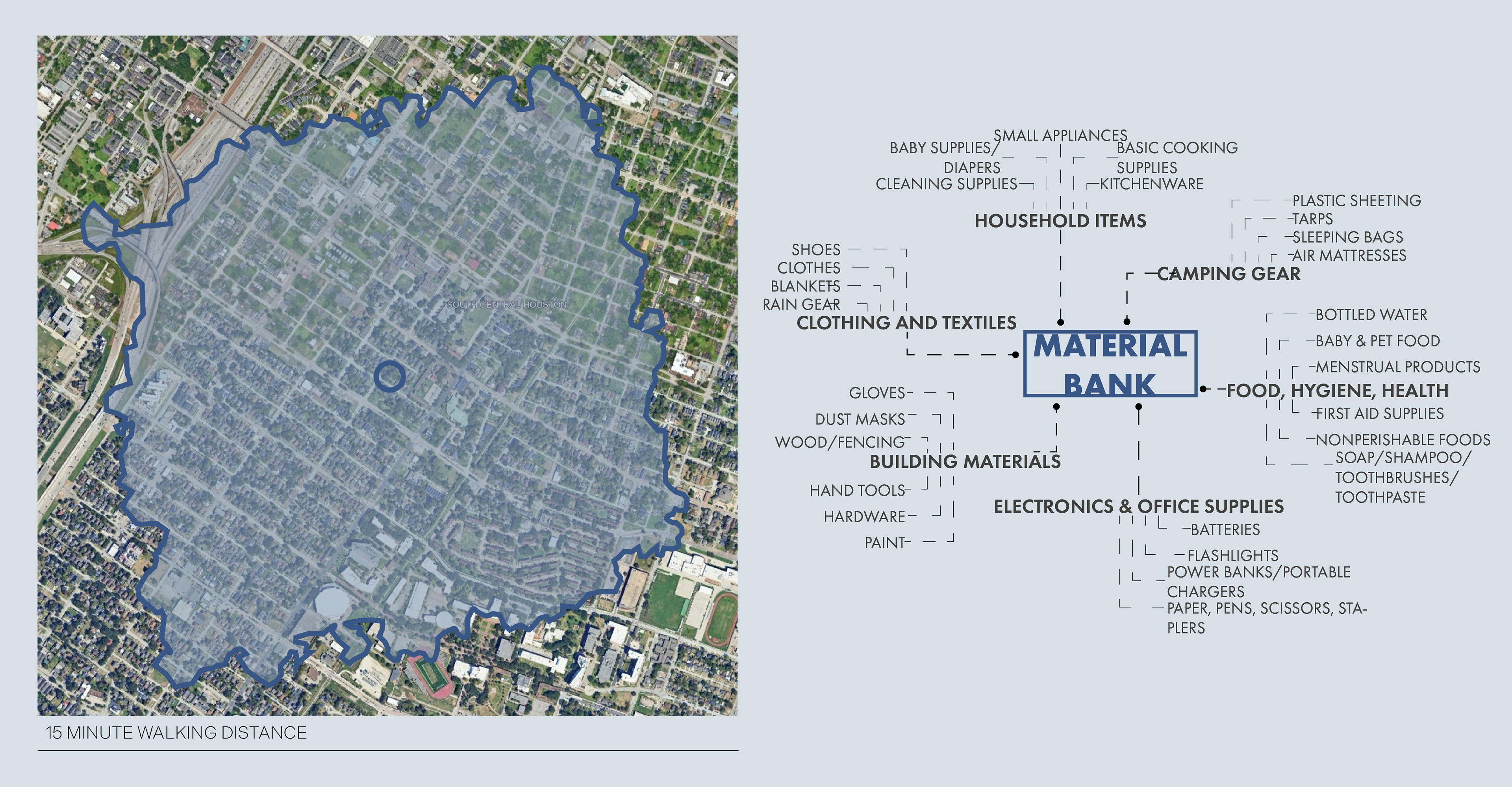
Because the material side of the bank requires physical infrastructure, this project proposes an addition to the side of the existing building so that the Hobby House can remain functional for the other criteria outlined by the EEDC. This addition is intended to serve a general 15-minute walking radius. The idea is that the ever-changing demographic needs of this zone would be tracked over time to inform what materials should be kept on hand.
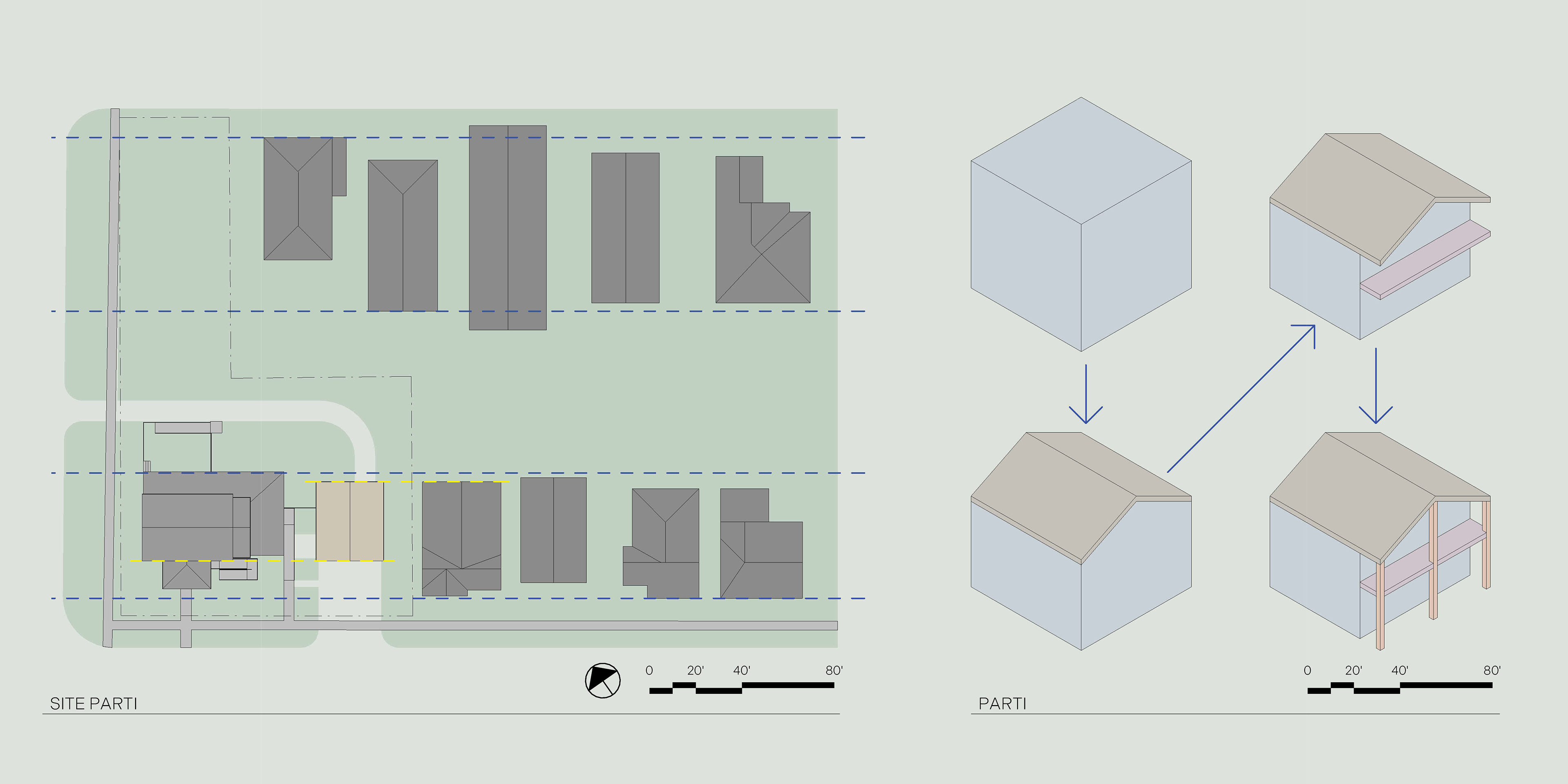
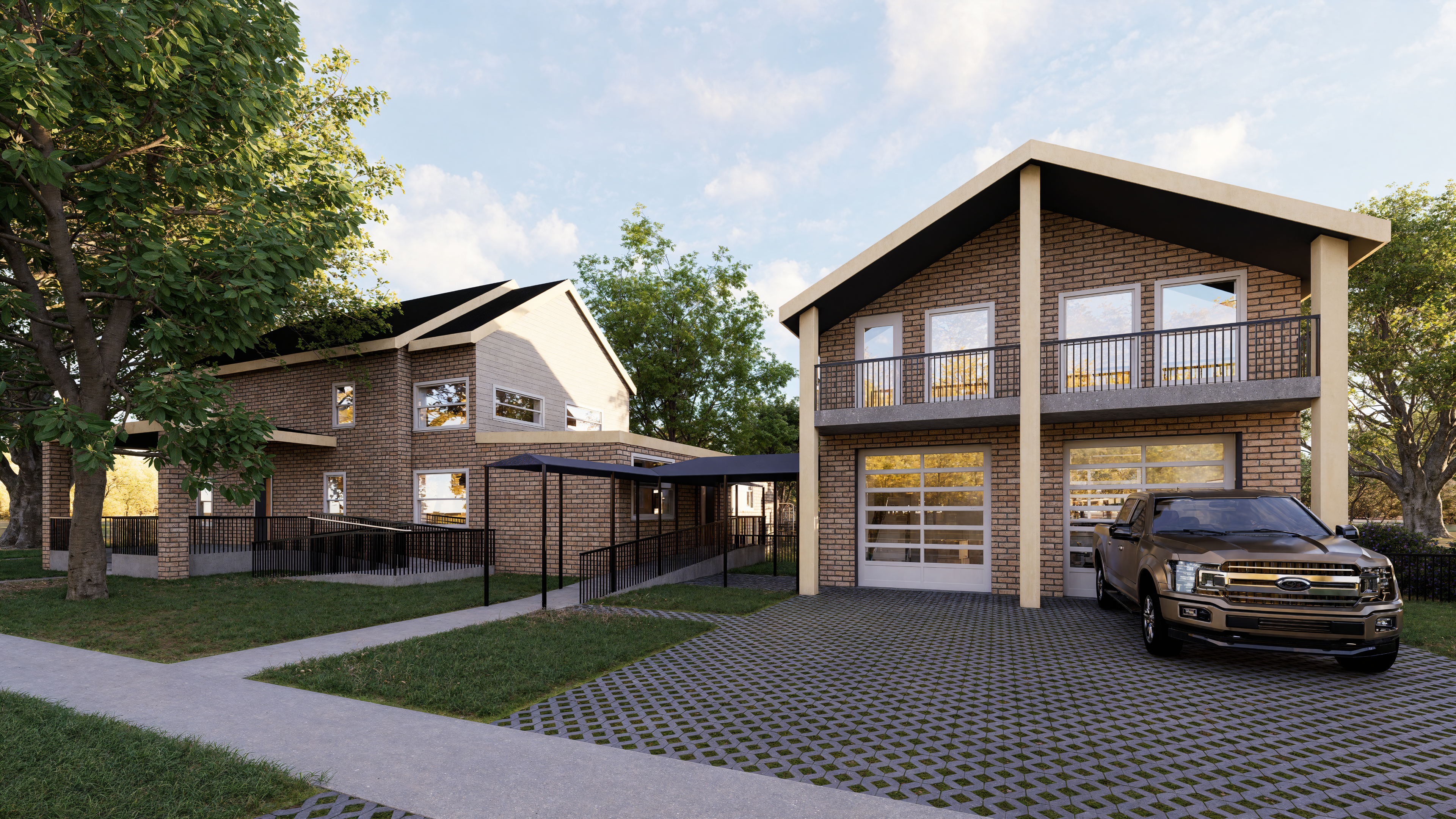
Since the site has two street fronts, the Winbern side was chosen for the addition in order to extend the street presence of the existing building, keep traffic off the larger street, and allow more open views of nature along Delano Street. The massing follows the lines of the existing building in plan view. In three dimensions, the form is meant to respect the architecture and overall vibe of the area, pulling inspiration from both the Hobby House and Project Row Houses — especially the shotgun typology. The addition is kept at a lower height than the Hobby House so it does not overpower the main building.
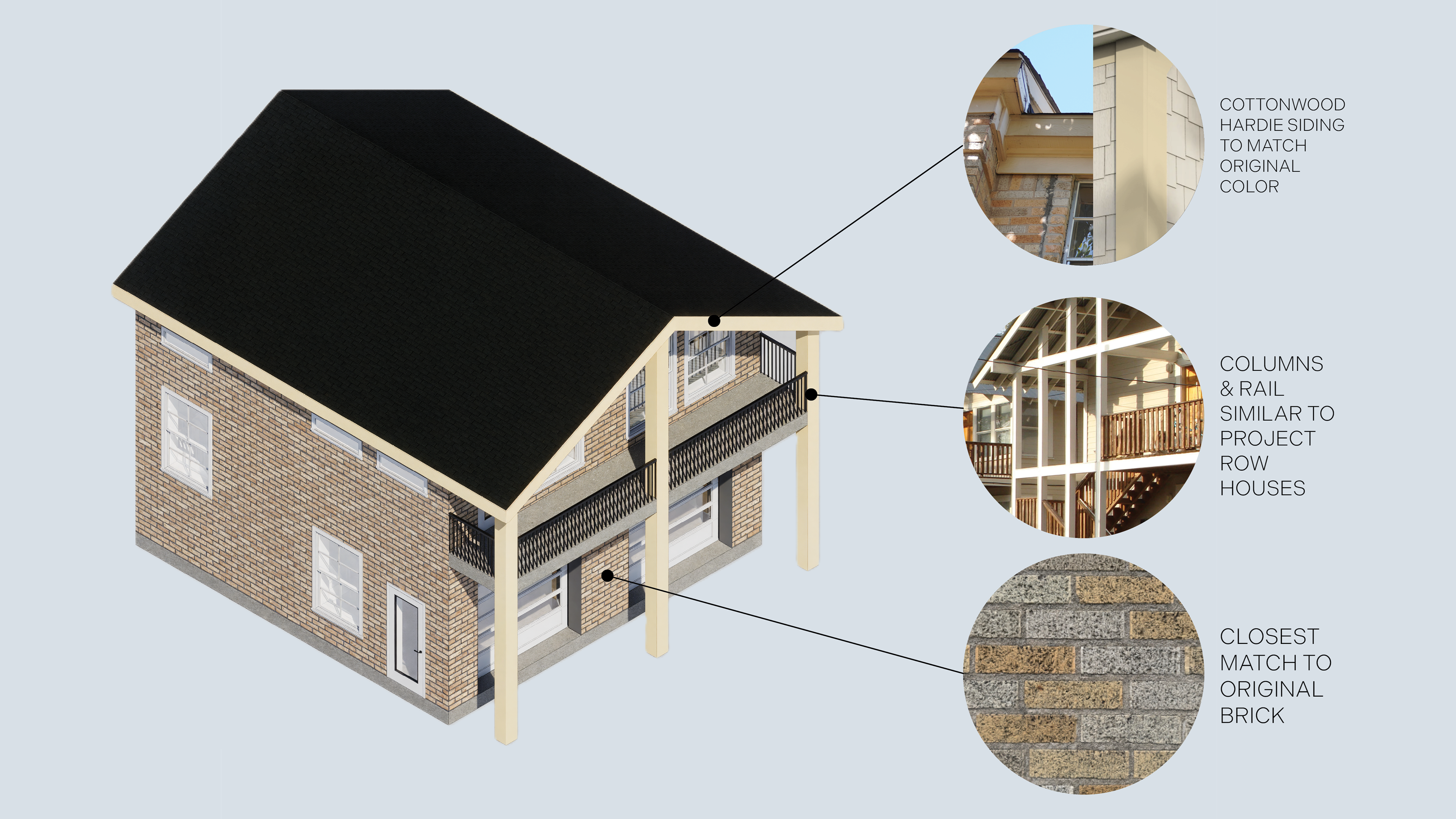
Materiality was very intentional in order to further fit the character of the site. The fiber cement trim and brick are designed to match the Hobby House as closely as possible. The columns and railing on the front façade are inspired by the nearby Project Row Houses. Permeable pavers are used for the driveway and drive-through lane to add an element of water sustainability.
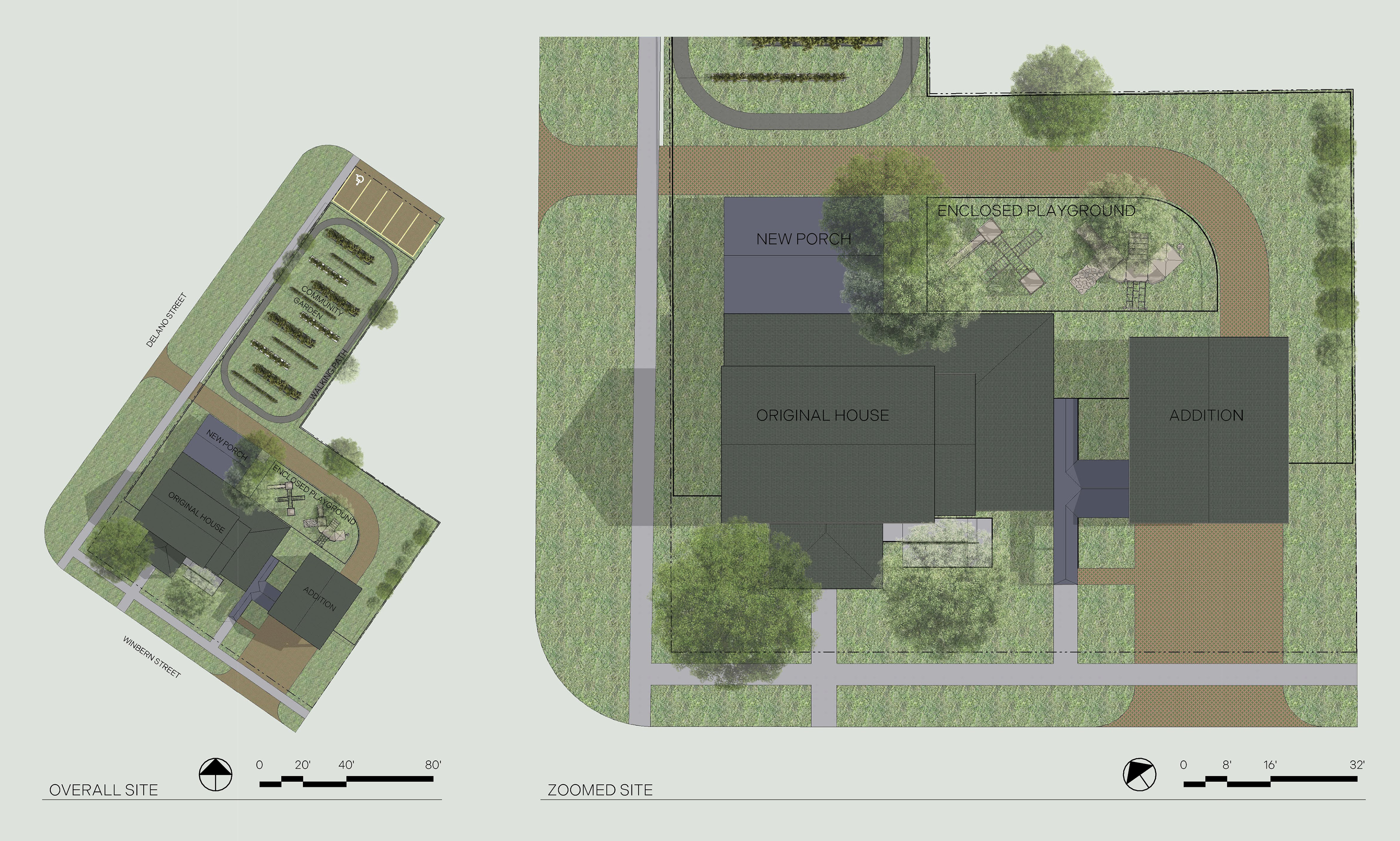
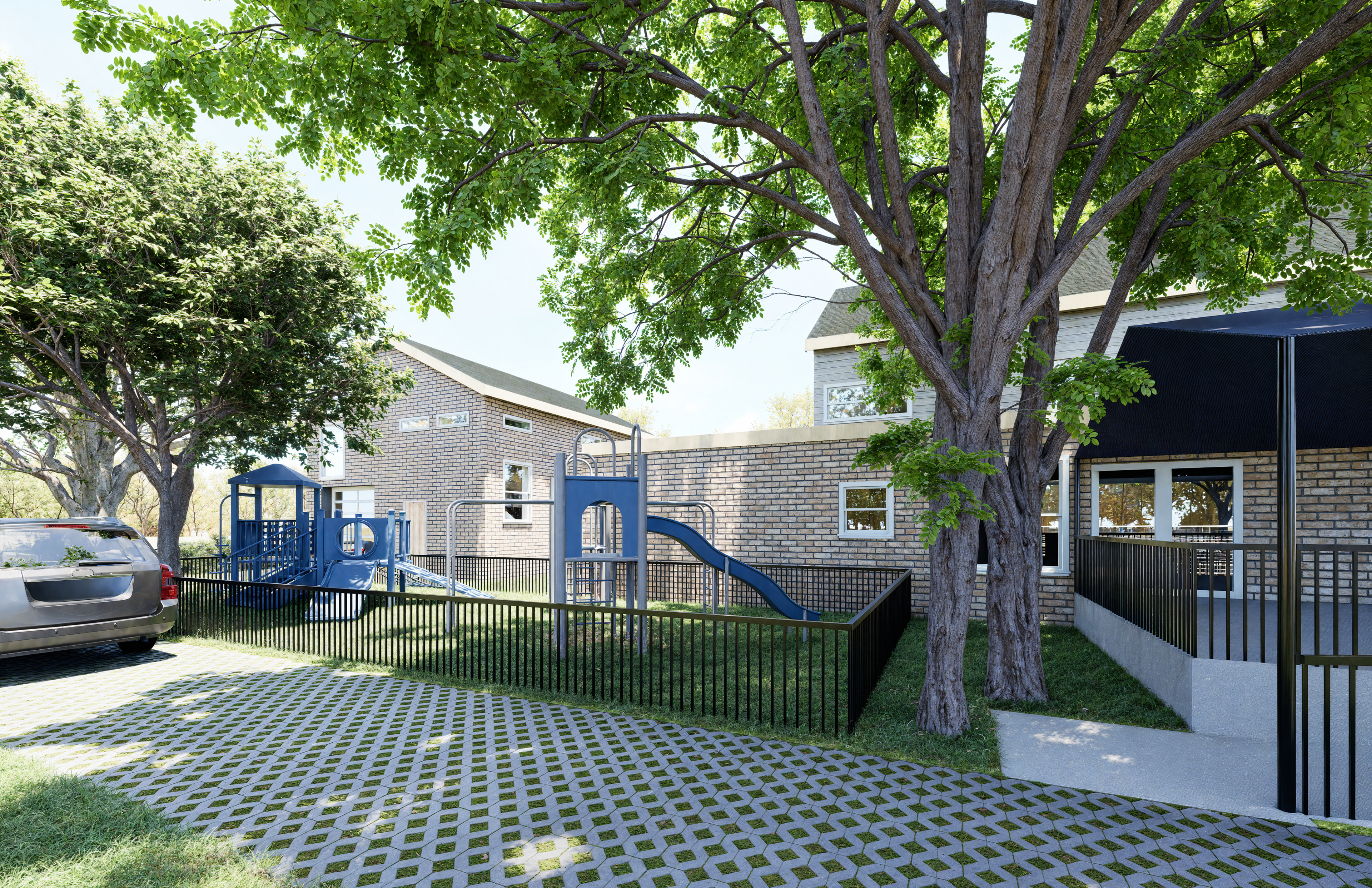
Because the addition faces Winbern Street, this allows space for a loading dock on the west side and a drive-through on the east side of the front façade. The drive-through moves through the building and exits onto Delano Street, creating an alcove for a desired playground within the drive path and placing it in view of the main structure. Other site improvements include relocating the community garden north to place it directly along the walking path and allow for expansion. A small number of parking spaces are located along the north edge of the site, out of the way of the main activity zones but still easily accessible from the path.
At the existing Hobby House, a new back porch is proposed, since the current one will need to be relocated. Adding double doors on the back façade from the main gathering space allows direct access to this porch. On the east side of the site, a covered walkway connects the new and existing buildings through an existing entrance off the Hobby House. Altogether, these site improvements allow for more functional use of the property and better integration of the addition.
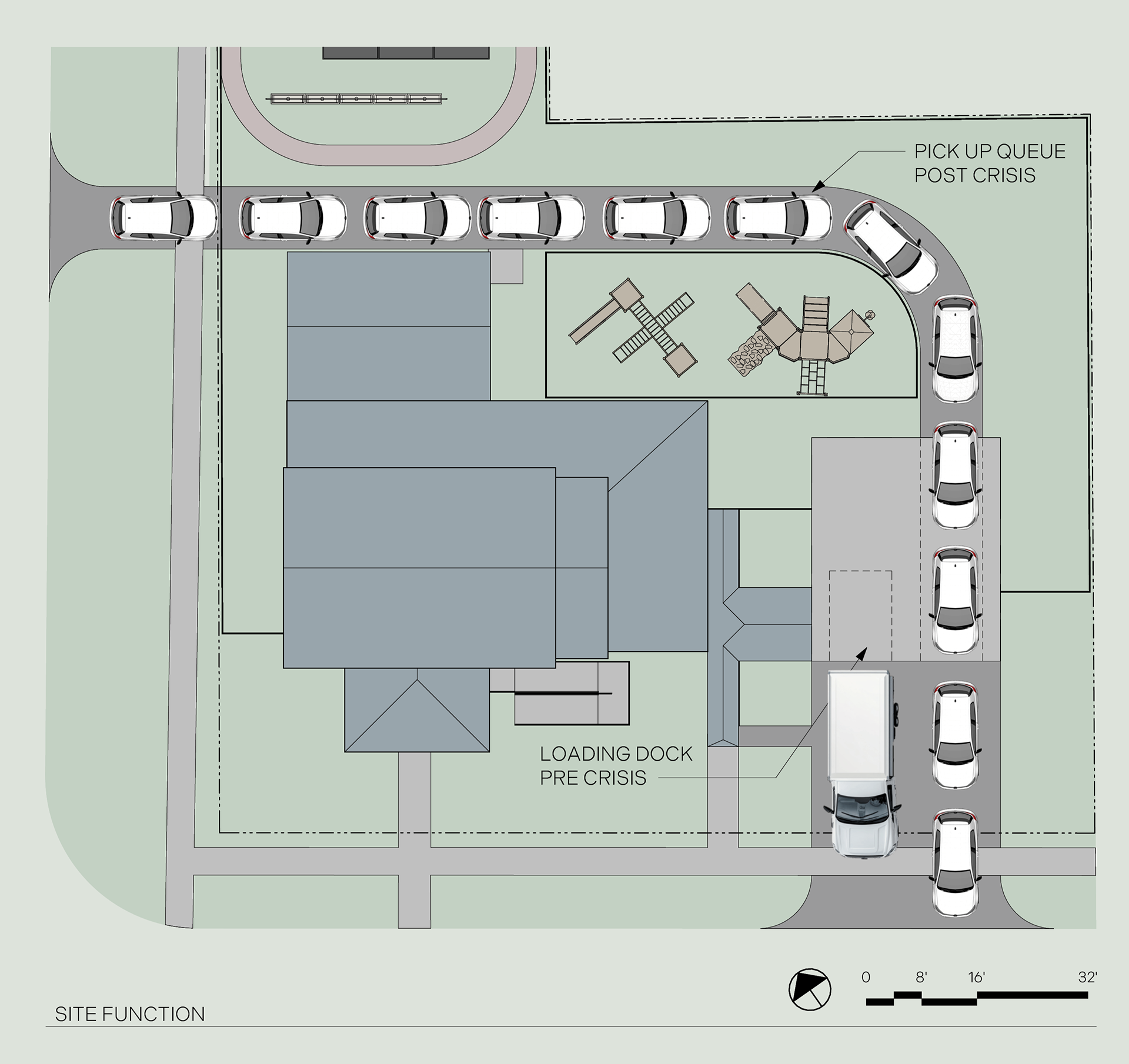
Zooming in on the logistics of the drive, the loading dock is intended to accommodate large trucks for pre-crisis deliveries to stock the bank. Post-crisis, the drive-through opens and feeds from the Delano Street entrance, allowing the queue to be mostly contained on site and minimizing disturbance to the surrounding neighborhood. The system is designed to accommodate not only cars, but also biking and walking, making it as accessible as possible.
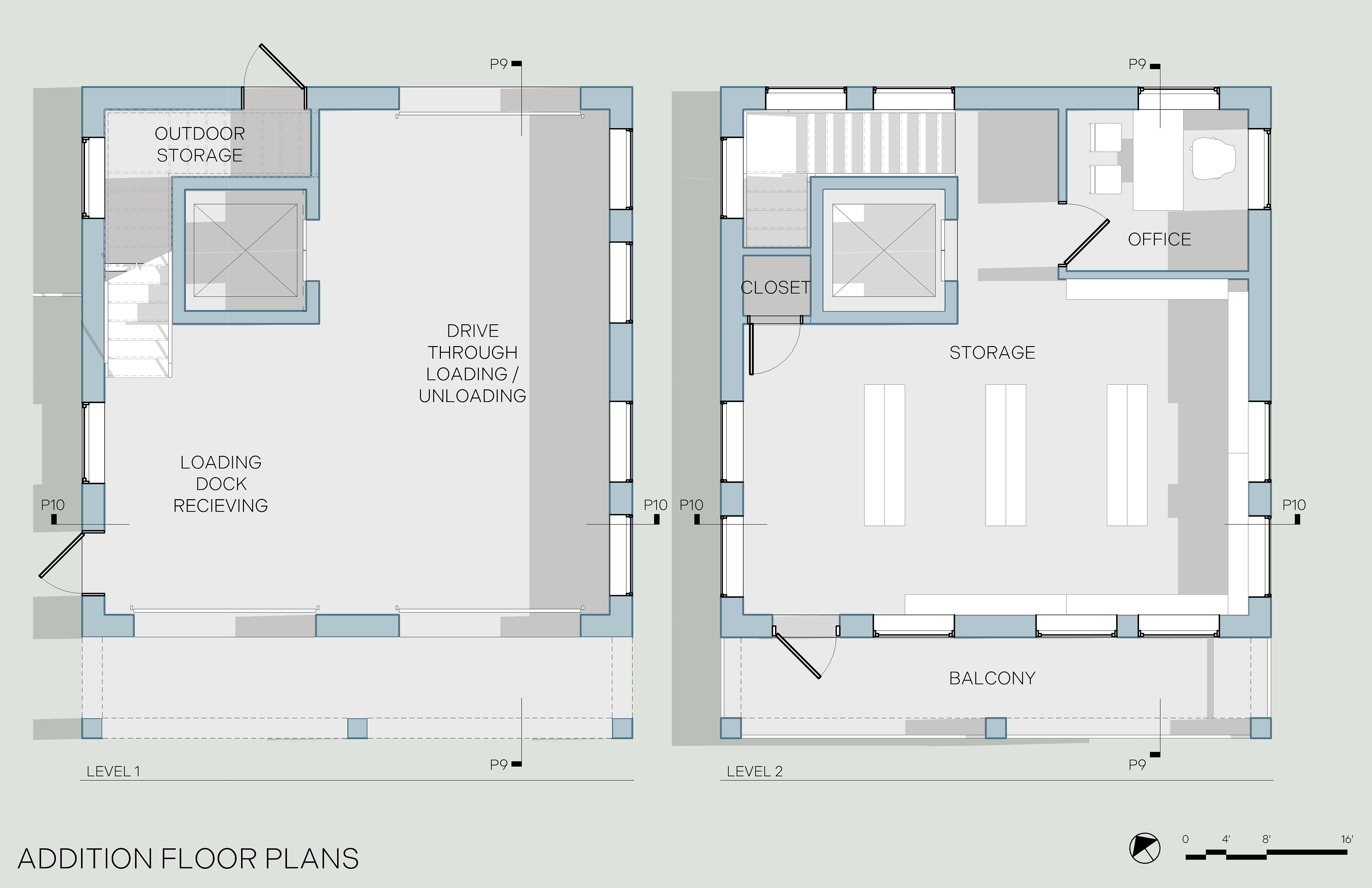
The garage doors on level one are 10 feet tall to accommodate any vehicles that need to interact with the building. The west loading dock door opens into a receiving and staging area. On the east side, the drive-through remains clear for loading and unloading. Beneath the stairs is a storage closet for playground equipment and outdoor activities. Level two is accessible by stairs or elevator and contains the main storage space. Tall ceilings and rows of shelving allow for maximum storage capacity, including the potential for refrigerated storage if needed. A balcony overlooking Winbern Street reinforces the neighborly character of the project. One office is included for administration of both the material bank and the monetary side of the Self-Insurance Bank. The addition does not include plumbing in order to keep costs down, with restrooms located in the Hobby House.
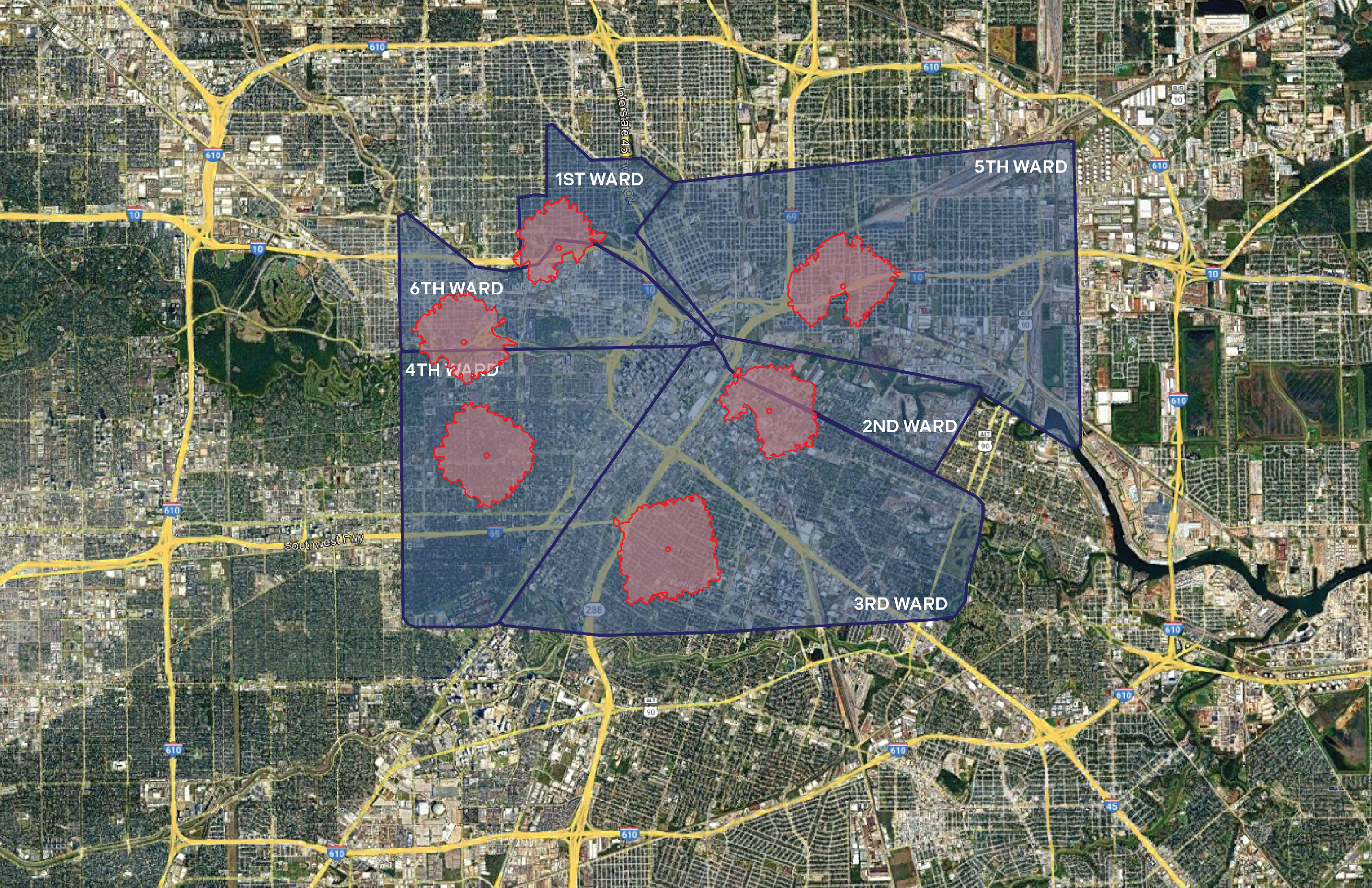
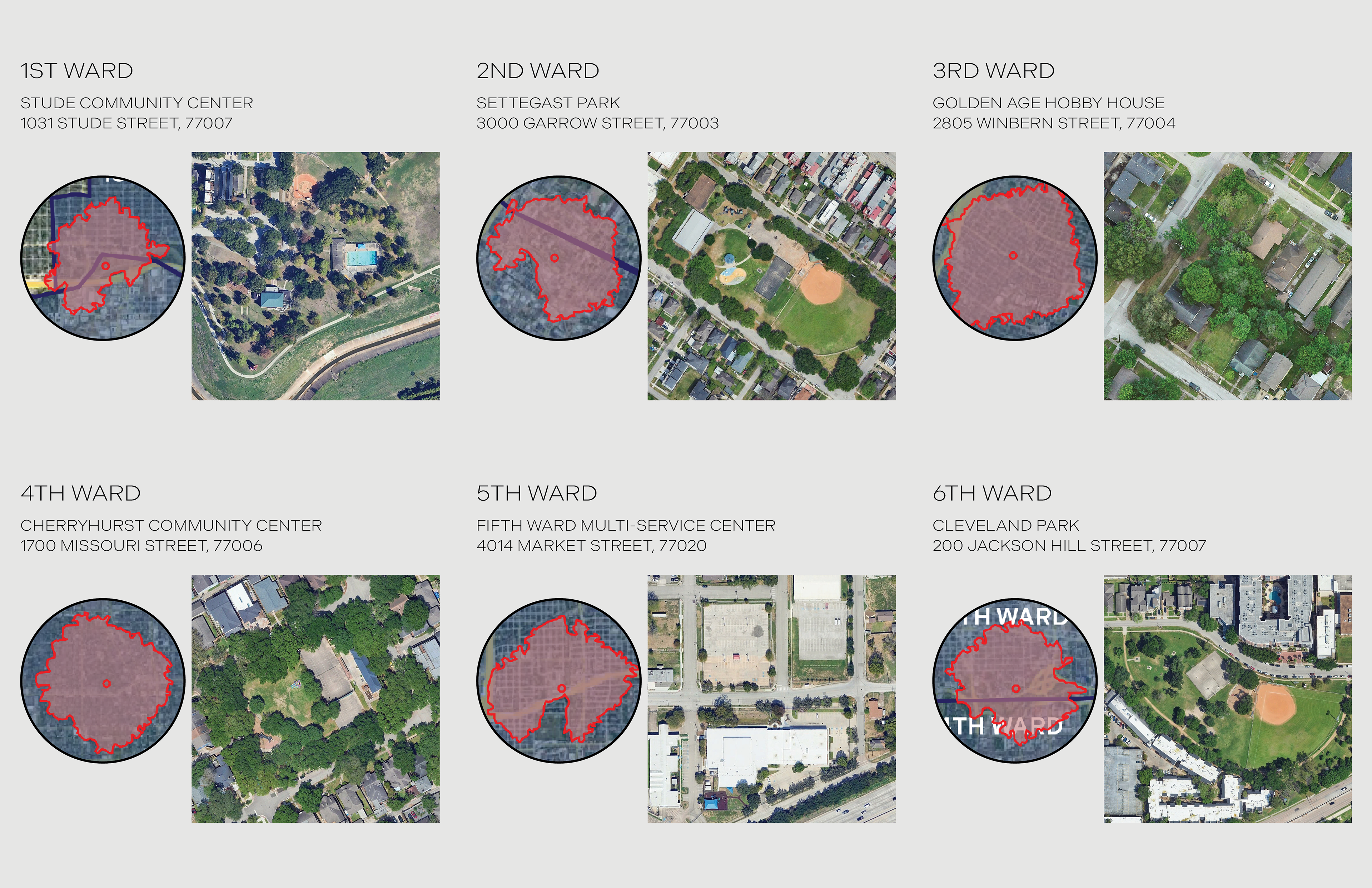
A key intention of this addition is that it can be repeated in other areas to impact more of the city. As an example, one site in each of Houston’s six wards was selected to demonstrate this potential. Of these sites, two are community centers, two are parks, one is a multi-service center, and one is the Hobby House. Each site sits within a primarily residential area and serves a 15-minute walking radius. The idea is that the exterior design would adapt to each location while maintaining the same core concepts in order to serve each community in a way that feels both consistent and local.